After more than a decade of investigations, litigation and extraordinary legal expense, one of the most important – and troubling – corruption cases handled by the UK’s Serious Fraud Office (SFO) has come to an end.
On 2 September, Eurasian Natural Resources Corporation (ENRC), the SFO, law firm Dechert and former Dechert partner Neil Gerrard announced that they had settled the remaining civil proceedings between them. The terms – including how much will be paid and by whom – are confidential, leaving the British public in the dark.
The settlement closes a remarkable chapter. But it should not be allowed to rewrite its history.
The SFO opened its investigation into ENRC in 2013, examining suspected fraud, bribery and corruption linked to the company’s acquisition of valuable mineral assets in the Democratic Republic of Congo (DRC) and elsewhere. ENRC consistently denied wrongdoing.
Ten years later, in August 2023, the SFO closed the investigation without charges, citing “insufficient admissible evidence to prosecute”. The decision was deeply controversial. By then, ENRC had mounted a wide-ranging legal campaign in response to the investigation, bringing proceedings against journalists, lawyers, investigators, former SFO officials and the SFO itself. A group of 22 civil society organisations criticised what they described as SLAPP tactics, warning that ENRC’s tactics risked undermining the investigation and silencing scrutiny.
There is no question that the SFO got serious things wrong. The High Court found improper dealings between SFO officials and ENRC’s former lawyer, Neil Gerrard. Those failures deserved exposure and accountability.
But that is not the whole story.
At the heart of the case: a hugely valuable mining asset
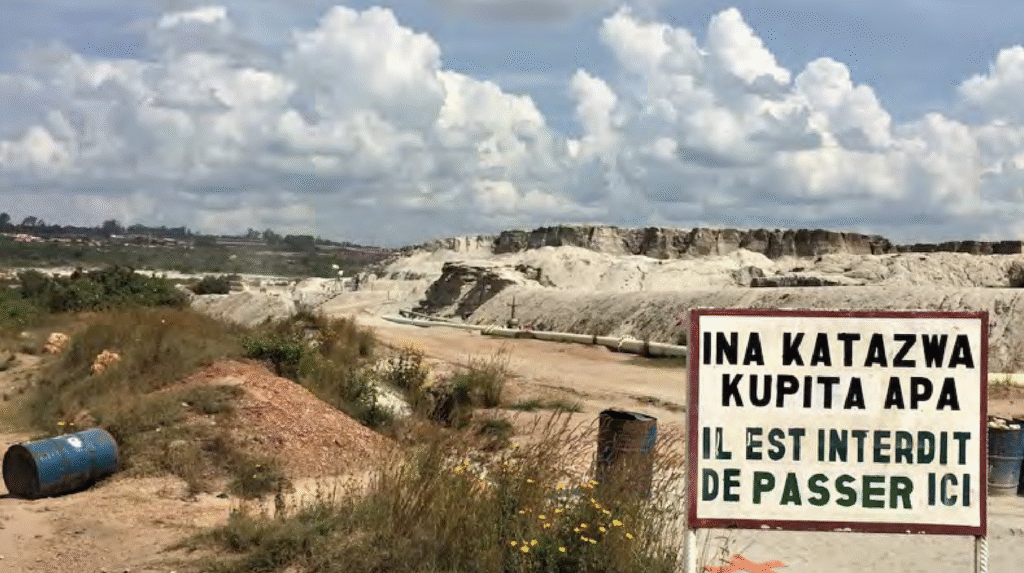
At the centre of the original controversy was the Kolwezi Tailings Project, now operated as Metalkol – an exceptionally valuable copper and cobalt asset in southern DRC.
A 2022 High Court judgment records the events that unfolded. Canada’s First Quantum Minerals alleged that the Congolese government illegally revoked its Kolwezi mining licence in 2009 and that Israeli businessman Dan Gertler subsequently acquired the rights for just $20 million. Within months, ENRC paid $175 million for a controlling stake in the corporate vehicle through which Gertler’s interests were held. ENRC later bought out his remaining stake.
Gertler was subsequently sanctioned by the United States under its Global Magnitsky programme. The US Treasury said he had amassed his fortune through hundreds of millions of dollars of “opaque and corrupt mining and oil deals” in the DRC. He remains under US sanctions today.
This was no minor mining asset. Metalkol is now among the DRC’s largest cobalt and copper producers – minerals crucial to rechargeable batteries and the wider energy transition. How control of such a valuable resource changed hands was therefore a legitimate and important subject for corruption investigators.
And while the High Court exposed serious failings by the SFO, its judgment was hardly a clean bill of health for ENRC.
Justice Waksman described ENRC as “dysfunctional” against a background of concerns about its corporate governance. He said it “cannot be doubted” that ENRC’s then Africa CEO, Victor Hanna – who had been directly involved in the acquisition of the Kolwezi Tailings Project – was “hostile to the investigation”. ENRC’s board resolved that Hanna should be “suspended for obstruction”, but it was never carried out. Instead, in an about-face, ENRC fired its own lawyers.
An extraordinary corporate counter-attack
What followed was an extraordinary corporate counter-attack. The Bureau of Investigative Journalism reported that ENRC spent around £400 million on professional fees and exceptional litigation costs, employing private investigators and more than a dozen law firms to fight the SFO’s probe. In one year alone, it spent £63 million – more than the SFO’s entire operational budget.
The campaign extended beyond the courtroom. Former SFO case controller John Gibson met journalist Tom Burgis in an underground car park in 2020 after leaving the agency. ENRC’s lawyers later demonstrated remarkably detailed knowledge of that supposedly secret meeting.
Former cabinet minister David Davis told UK Parliament that Gibson, Burgis or both appeared to be under “aggressive surveillance”, describing such tactics as “intimidating” and “unethical”. ENRC later sued Gibson personally over alleged unlawful leaks; the claim was contested and settled without trial.
ENRC also sued Burgis and HarperCollins over passages in Kleptopia, but the High Court dismissed the libel claim and awarded costs to the defendants. A separate claim against Burgis and the Financial Times over related reporting was later withdrawn. The then Justice Secretary cited the Kleptopia case as an example of a SLAPP, accusing litigants of using “deep pockets and the UK courts to financially bully their critics into submission”.
Who counts as a victim?
ENRC has now secured a confidential settlement with the SFO, though the final cost to the UK taxpayer remains unknown. At one point, the SFO recognised a £237 million provision for the ENRC litigation. By 31 March 2026, that had fallen to £15 million – its “best estimate” of liability at that point. How much the public purse had to pay in damages to ENRC should be transparent, not hidden behind confidentiality.
But another question remains unresolved: who counts as a victim?
When the Kolwezi Tailings Project closed after its mining licence was stripped, more than 700 Congolese mine workers lost their jobs. In a place where alternative employment is scarce, the consequences were devastating. Behind the legal arguments over licences, corporate transactions and alleged corruption were hundreds of people who had lost their livelihoods.
Four of those workers sought recognition from the SFO as victims of the alleged corruption. They are now waiting for the High Court to decide whether they count as victims under the SFO’s Victims’ Right to Review scheme, which would allow them to ask the SFO to review its decision to close the ENRC corruption investigation.
The contrast cannot be ignored. ENRC and its parent group were able to spend hundreds of millions pursuing redress for the harm they say the company suffered, while Congolese workers, relying on legal aid, are still fighting simply to have their own harms recognised.
The corporate litigation may be over. But for those workers and communities on the ground, its consequences are not – nor are the wider questions it raises about corruption, accountability and whose harm counts.
Congo’s Victims of Corruption (Jan 2020)