The Ontario Court of Appeal has ruled against Tanzanian families and survivors seeking justice for security-related violence at Barrick’s North Mara gold mine. In a serious blow to corporate accountability in Canada, the decision – handed down on Tuesday 7 April – closes the door on the Ontario courts. But the lawyers for the plaintiffs have swiftly announced they will take the fight to the Supreme Court of Canada.
In the judgment for Matiko John v. Barrick Gold Corporation, the court ruled that the 29 claimants should not pursue their case in Ontario but should instead seek justice in Tanzania, which it deemed the more appropriate forum. The substance of their claims – alleged killings, shootings, beatings and torture – was never examined. The court did not reach the stage to decide whether Barrick bore any responsibility. It was tasked only to decide in which jurisdiction that question should be answered. Its reply was clear: not here.
CFM Lawyers and Phillips Barristers PC will now place the question of accountability for Canadian multinationals extracting resources abroad before the country’s highest court. Whether the Supreme Court accepts the case, and what it decides, will shape corporate accountability law in Canada for years to come.
A Canadian institution only when it suits the narrative
Barrick, now rebranded as Barrick Mining Corporation, is one of the world’s largest gold mining companies. Founded in 1983 and based in Toronto, it trades on the Toronto Stock Exchange, files with Canadian regulators, and raises capital in Canadian markets. Its name adorns a permanent gallery at the Royal Ontario Museum – one of Canada’s most visited institutions – funded by a $3 million donation. In 2025 alone, Barrick sold approximately 3.3 million ounces of gold, generating revenues of nearly $17 billion. It is, by any measure, a major Canadian corporate institution.
Yet in court, Barrick successfully argued that the presence of its headquarters in Toronto was minimal, essentially administrative, and hence Ontario had no meaningful connection to its overseas operations. The court accepted that argument. It concluded that what happens at Barrick’s mine in Tanzania is not a concern for Canada – not in any meaningful legal sense.
The result creates a profound accountability gap, one that works systematically in favour of Canadian companies and against the communities harmed by their overseas operations. Canadian when it suits, beyond the reach of Canadian courts when it does not.
What happened at the North Mara gold mine in Tanzania
RAID and other civil society organisations have documented violence at North Mara for years. The pattern is serious, long-standing and well-evidenced. An estimated 77 to 100 people – local residents and small-scale miners eking out a living from the mine’s waste rock – have been allegedly shot and killed by Tanzanian police assigned to the mine over the past decade. Lawyers representing the plaintiffs say the real number is likely much higher. Many others have been injured.
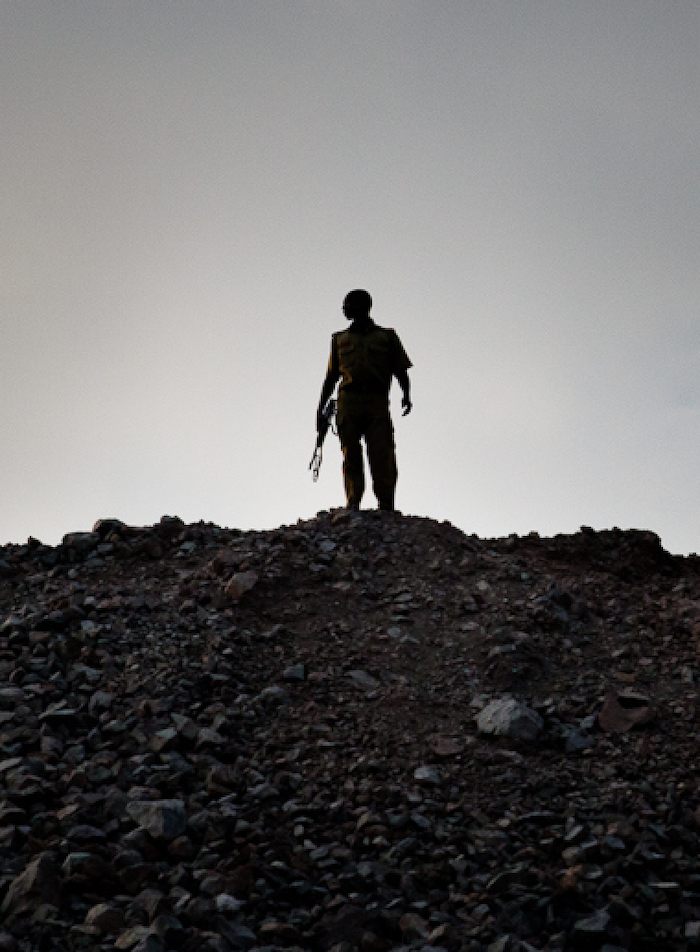
The police presence at North Mara is not incidental. Barrick’s Tanzanian subsidiary (84% owned by Barrick, with the remaining 16% held by the Tanzanian government) pays, houses, feeds and equips approximately 150 Tanzanian police officers who provide security at the mine, with liaison officers working directly inside the mine’s own security office. The extent of this relationship was set out in documents disclosed during the case, including formal written agreements, knows as Memorandums of Understanding, between the mine and the police.
The claimants argued that Barrick, which issues its global human rights and security policies issued from its Toronto headquarters, has a duty of care and should answer in Canada for the deaths and injuries of local residents at the hands of the Tanzanian police assigned to guard the mine.
©2023 RAID
Why justice in Tanzania is not a realistic option
Against a backdrop of escalating state violence during the 2025 elections, and a brutal crackdown on dissent, the Ontario court concluded that Tanzania, not Canada, is the appropriate place for these claims to be heard. It accepted evidence from the defence that the Tanzanian judiciary is independent and competent.
This is despite the reality that impoverished rural farmers and small-scale miners cannot afford lawyers and are at an extreme disadvantage against a well-funded company. Contingency fees are prohibited in Tanzania and legal aid is severely underfunded.
Cory Wanless, a partner at Phillips Barristers PC and co-counsel for the plaintiffs, said in a statement on Tuesday: “Access to justice is not achieved by forcing these plaintiffs to seek help from an extremely underfunded legal aid system in Tanzania to litigate a complex human rights claim against a multinational corporation. The reality is, if this lawsuit is not heard in Ontario, it will not be heard at all.”
Elizabeth Matiko Irondo, a plaintiff in the case, said: “I cannot pay for a lawyer in Tanzania, and I can’t believe I have been told to instead ask for representation from a legal aid system with almost no resources.”
The barriers are not only financial. The Tanzanian government owns 16% of the mine. In communities living in its shadow, that matters: challenging the mine’s operations means challenging the state. No one has ever successfully brought a case of this kind against the mine in Tanzania, and that is not an accident.
In the months surrounding Tanzania’s elections, hundreds were reported killed by state security forces, prompting a joint statement of concern from the Foreign Ministers of Canada, the United Kingdom and Norway. The plaintiffs sought to place that evidence before the court. It was refused. For these claimants, pursuing a complex human rights claim against a powerful multinational corporation in that environment is not merely difficult – it is inconceivable.
Access to justice – gaps between Canada and other jurisdictions
This week’s decision sits uneasily with legal developments elsewhere. Amnesty International Canada, as a third-party intervenor in the appeal, argued that in cases where people experience human rights abuses connected to Canadian companies’ operations overseas, Canadian courts should apply jurisdiction and forum rules in line with the right to an effective remedy – a right recognised in international law. The court did not accept that argument.
The contrast with other jurisdictions is stark. In the United Kingdom, the Supreme Court’s ruling in Vedanta Resources v. Lungowe – involving Zambian villagers and a British mining company – held that if funding a case abroad isn’t realistically feasible, the home court should retain jurisdiction. In Okpabi v. Royal Dutch Shell, the UK Supreme Court held that a parent company’s group-wide policies establishes a triable basis for holding a parent company liable for harms linked to its foreign subsidiary. In both cases, the courts looked squarely at what justice would actually mean for the claimants, not merely whether the foreign legal system was officially deemed to be competent.
Canadian law, as applied by the Ontario appeal court judges, treated access to justice as one consideration among many, weighed against witness availability and other practical considerations, but not without key blind spots. Access to justice was not treated as a defining issue, as it has been in comparable cases before the UK Supreme Court. The question of whether justice can be accessed is one of the issues that the Supreme Court of Canada now has the chance to settle.
The Supreme Court of Canada to weigh in
There has been some progress on corporate accountability in Canada. In Nevsun Resources v. Araya, the Supreme Court held in 2020 that claims under customary international law, including for torture and extrajudicial killing, could be brought in Canadian courts against Canadian companies for overseas conduct. Other transnational mining cases – including Garcia v. Tahoe Resources Inc. and Choc v. Hudbay Minerals – show that Canadian courts have been prepared to hear claims arising from violence linked to Canadian-owned mines overseas.
The claimants in Matiko John brought precisely this kind of claim. The Ontario courts did not determine whether it had merit, only that Tanzania was the better place to resolve it. This sits very uneasily with Nevsun‘s promise.
This case raises fundamental questions about the reach of Canadian courts, the legal weight of corporate human rights commitments, and access to justice for impoverished Global South claimants seeking to hold Canadian companies accountable – issues that deserve the Supreme Court’s attention.
Canada prides itself on its commitment to human rights. Surely it cannot be the jurisdiction where corporate impunity finds its refuge.
Photo Credit: Court of Appeal for Ontario